Use cases - AI customer segmentation ecommerce
AI customer segmentation for ecommerce teams
AI customer segmentation helps ecommerce teams move from broad lists to practical groups. Instead of manually guessing every segment, the system can look at purchase history, cart behavior, product affinity, recency, frequency, value, and risk signals.
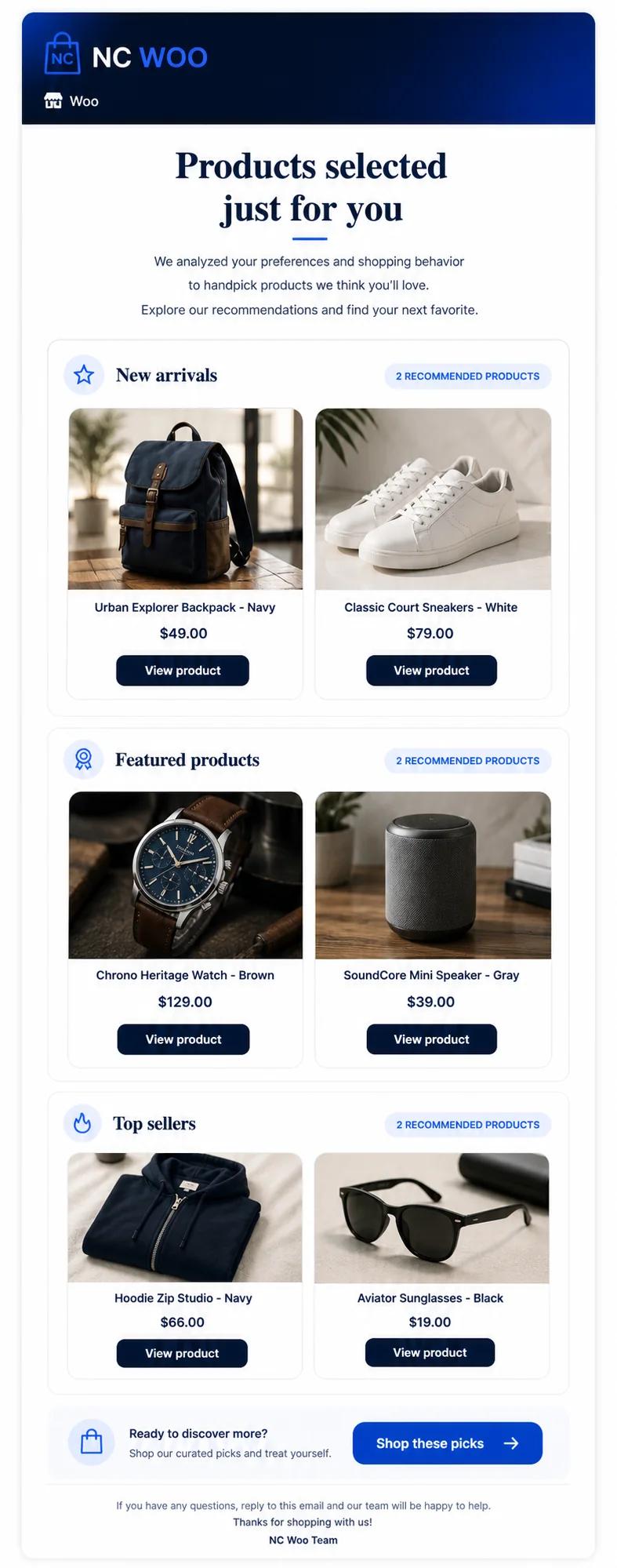
Product workflow evidence
Product example: an ecommerce advisor workflow using customer and product context.
This screen is shown as a concrete interface example. Results depend on store data, workflow rules, consent, and customer behavior; it is not a performance guarantee.
Problems
What usually blocks this workflow
- Generic lists are too broad for personalized recovery, upsell, and retention workflows.
- Segments become stale when they are not refreshed from live store behavior.
- Teams often lack a clear link between segments and revenue actions.
Workflow
A practical implementation path
- 1Import customer, order, cart, and product history from the store.
- 2Group customers by behavior, value, purchase stage, product interest, and recovery opportunity.
- 3Send segment signals to email, recommendations, upsell, and alert agents.
- 4Monitor revenue and conversion by segment.
Editorial guide
Make every segment actionable and time-bound
A segment is useful when it changes a decision. Define the entry signal, exit rule, refresh frequency, permitted workflows, and expected outcome. Dynamic segments should update after meaningful events so customers do not remain in a high-intent or at-risk group after their context changes.
- Name the action the segment enables.
- Record why a customer entered and when the membership expires.
- Monitor segment size, movement, conversion, and message pressure.
Use AI where fixed rules become brittle
Rules remain valuable for consent, geography, lifecycle state, and business exclusions. Predictive scoring can help rank customers within those boundaries when many signals interact. Keep the score explainable enough for operators to inspect examples and adjust the workflow safely.
How NeuroCheckout helps
Applying this workflow with specialized ecommerce AI agents
NeuroCheckout is built for teams that want practical automation from store data. The goal is to connect signals to actions and keep the revenue impact visible.
- The segmentation agent turns customer groups into practical automation inputs.
- Segments can support abandoned cart recovery, recommendations, and marketing orchestration.
- Revenue monitoring helps identify which segments deserve attention first.
Metrics
What to measure
FAQ
Common questions
What data is useful for ecommerce segmentation?
Useful inputs include orders, cart history, product categories, purchase recency, average order value, email engagement, and customer lifecycle stage.
Why connect segmentation to AI agents?
Segments become more useful when they trigger actions such as recovery emails, recommendations, upsell prompts, and business alerts.
Next pages
Related ecommerce automation guides
ecommerce personalization software
Ecommerce personalization software for revenue workflows
Open resourceecommerce email marketing automation
Ecommerce email marketing automation with AI agents
Open resourceAI product recommendations ecommerce
AI product recommendations for ecommerce growth
Open resourcecustomer support revenue signal