Guides - customer list pricing alternative ecommerce
Customer list pricing alternative for ecommerce automation
Customer-list pricing can create tension for ecommerce teams: the more customer data a store keeps, the more expensive some tools can become. NeuroCheckout is designed so Starter and Pro pricing does not increase because the synced customer or contact list grows. The plans focus on operational capacity instead.
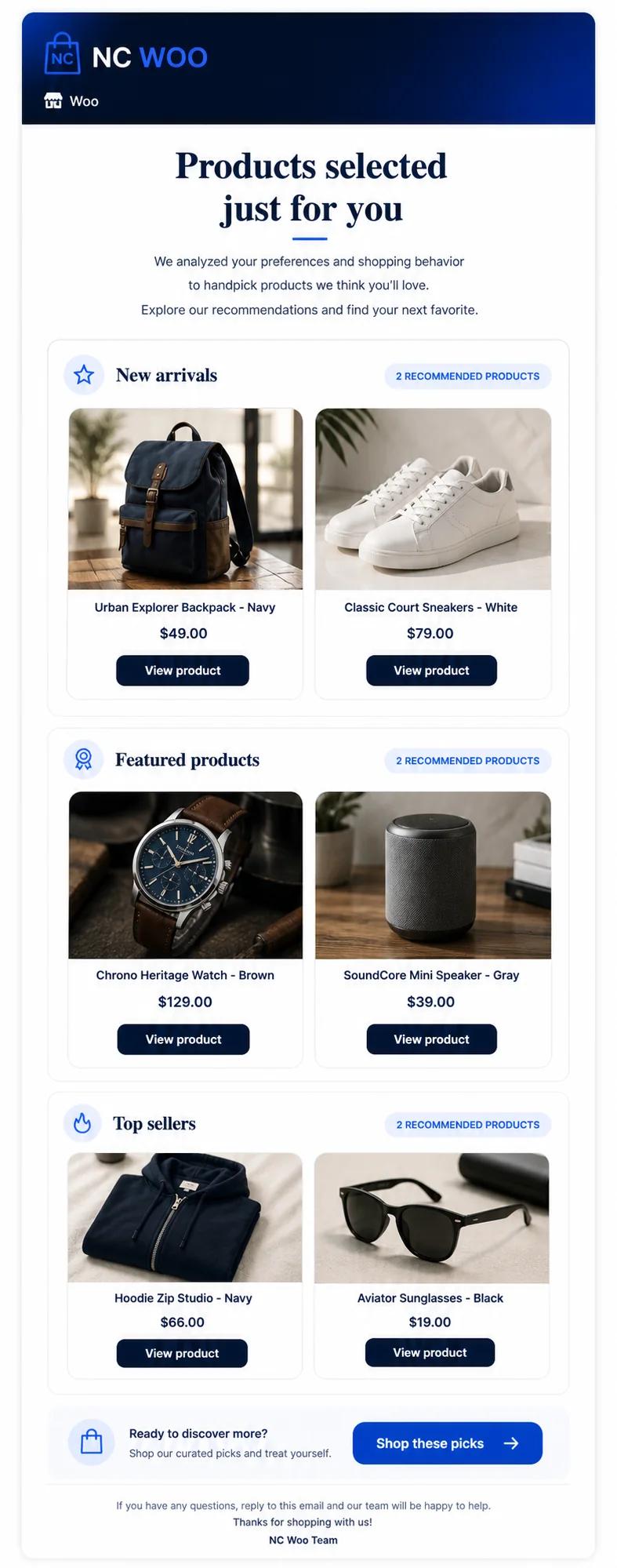
Product workflow evidence
Product example: an ecommerce advisor workflow using customer and product context.
This screen is shown as a concrete interface example. Results depend on store data, workflow rules, consent, and customer behavior; it is not a performance guarantee.
Problems
What usually blocks this workflow
- Teams may hesitate to sync useful customers or contacts when pricing is tied to list size.
- Marketing automation budgets can become less predictable during growth periods.
- Pricing based on contacts does not always reflect whether automation is creating revenue.
Workflow
A practical implementation path
- 1Keep customer, cart, product, order, and revenue data available for automation decisions.
- 2Choose a plan by connected stores, active agents, and email capacity.
- 3Use the 7 AI agents to turn the customer data into recovery, recommendation, segmentation, upsell, email, and alert actions.
- 4Measure whether the plan pays for itself through recovered and agent-assisted revenue.
How NeuroCheckout helps
Applying this workflow with specialized ecommerce AI agents
NeuroCheckout is built for teams that want practical automation from store data. The goal is to connect signals to actions and keep the revenue impact visible.
- No customer-count pricing means customer list growth does not automatically change Starter or Pro subscription price.
- Starter includes 78,000 emails/month and Pro includes 178,000 emails/month.
- The agent stack is built to make customer data useful rather than expensive to keep synced.
Metrics
What to measure
FAQ
Common questions
Does NeuroCheckout limit ecommerce customers?
Starter and Pro are not priced by the number of synced ecommerce customers or contacts. Plan limits focus on stores, active agents, and email capacity.
Why is customer-list pricing risky for growing stores?
It can make costs rise as the list grows, even before the team proves that every additional contact creates more revenue.
Next pages
Related ecommerce automation guides
ecommerce email automation without contact limits
Ecommerce email automation without contact limits
Open resourceKlaviyo pricing alternative
Klaviyo pricing alternative for ecommerce AI agents
Open resourceOmnisend pricing alternative
Omnisend pricing alternative for ecommerce automation
Open resourcebest abandoned cart recovery software