Guides - best abandoned cart recovery software
Best abandoned cart recovery software: what to look for
The best abandoned cart recovery software should do more than send a reminder. It should understand the cart, customer, products, timing, and outcome. A strong tool helps you recover orders while learning which recovery tactics actually create profitable revenue.
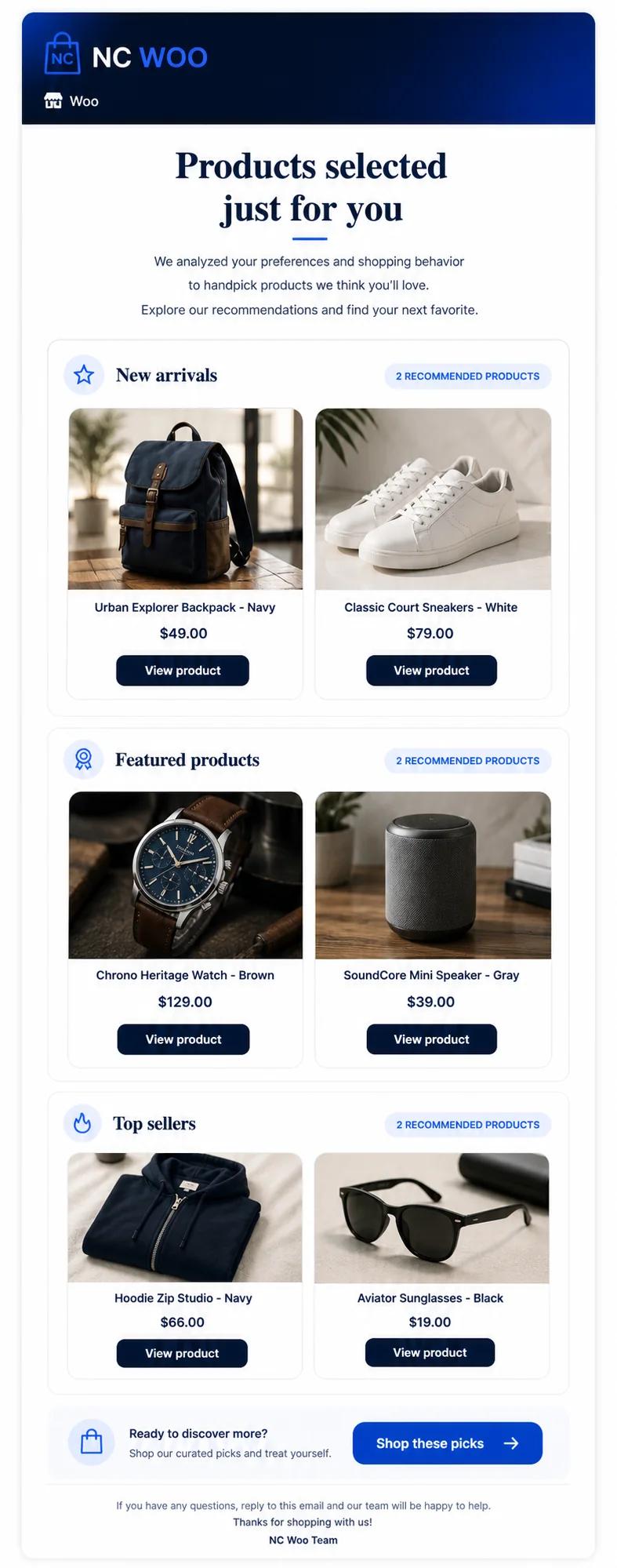
Product workflow evidence
Product example: an ecommerce advisor workflow using customer and product context.
This screen is shown as a concrete interface example. Results depend on store data, workflow rules, consent, and customer behavior; it is not a performance guarantee.
Problems
What usually blocks this workflow
- Many tools focus on sending messages but do not connect recovery to broader revenue workflows.
- Simple reminder sequences can become repetitive and hard to optimize.
- Reporting often stops at opens and clicks instead of recovered orders and revenue.
Workflow
A practical implementation path
- 1Start with a reliable cart event pipeline from your ecommerce platform.
- 2Segment carts by value, product category, customer type, and timing.
- 3Personalize the recovery message and product suggestions based on the cart context.
- 4Measure conversion, recovered revenue, and the impact of each recovery rule.
Editorial guide
Define best for your operating constraints
The best recovery software is the one that fits the store's data quality, channels, consent model, team capacity, and reporting needs. A smaller team may value dependable defaults and clear attribution. An agency may need multi-store separation, repeatable templates, and client-level reporting. Document these constraints before comparing plans.
- Must-have integrations and events.
- Required controls for contact pressure and discounts.
- Reporting needed to defend attributed revenue and operating cost.
Compare total workflow cost
Subscription price is only one input. Include setup, data cleanup, content production, monitoring, additional sending costs, and the time required to reconcile revenue across tools. A clear evaluation period should report both added revenue and the resources used to produce it.
How NeuroCheckout helps
Applying this workflow with specialized ecommerce AI agents
NeuroCheckout is built for teams that want practical automation from store data. The goal is to connect signals to actions and keep the revenue impact visible.
- NeuroCheckout combines cart recovery with product recommendations, segmentation, and revenue monitoring.
- The platform is built for ecommerce teams that want AI agents to execute workflows, not only report on them.
- Starter and Pro plans include cart recovery as part of a broader revenue automation system.
Metrics
What to measure
FAQ
Common questions
What should I compare first?
Compare ecommerce integration quality, recovery segmentation, personalization depth, deliverability controls, and revenue attribution.
Is a dedicated cart recovery tool enough?
It can be enough for a simple store, but growing stores often need cart recovery connected to recommendations, segmentation, and revenue monitoring.
Next pages
Related ecommerce automation guides
AI abandoned cart recovery tools
AI abandoned cart recovery tools: what ecommerce teams need
Open resourcecart abandonment AI agent
Cart abandonment AI agent for ecommerce recovery
Open resourceAI abandoned cart recovery
AI abandoned cart recovery for Shopify, WooCommerce and more
Open resourceKlaviyo alternative ecommerce AI